A clear Singapore wedding day schedule is less about filling every minute and more about giving the day a calm shape: welcome guests, share the important moments, make room for a meal and conversation, and end with a cue everyone understands. This practical planning guide shows how to build a run sheet around your ceremony, guest experience and chosen venue without treating a sample schedule as a promise that every celebration must follow.
Under Der Linden’s current weddings and events page describes its venue as a colonial black-and-white bungalow at Wessex Estate for intimate weddings and solemnisation. Couples considering it should contact the events team directly for current arrangements and a quote; details can change, so confirm what is available for your date. The timing framework below is general planning guidance for Singapore weddings, not a description of any venue’s package or service.
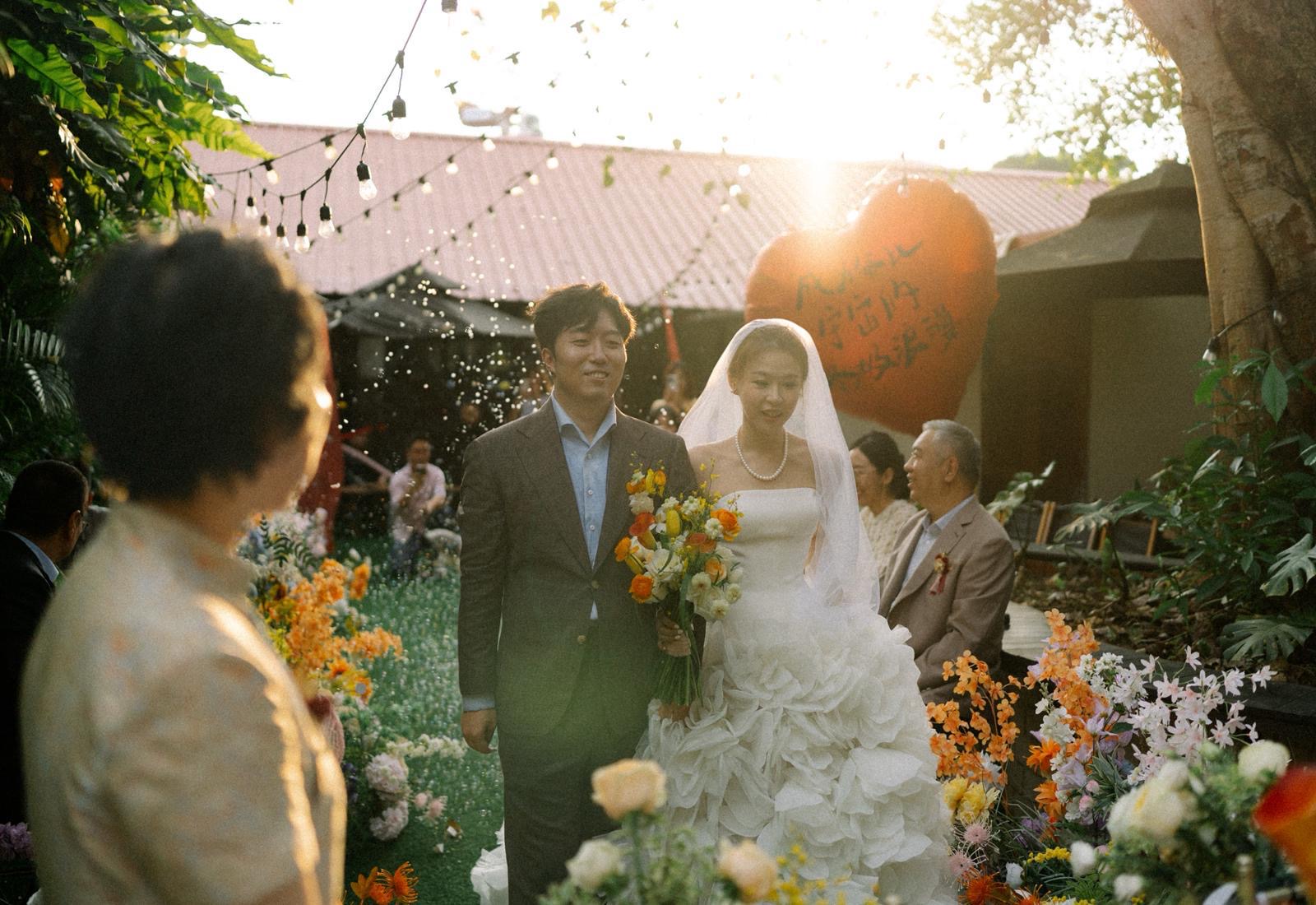
What should a Singapore wedding day schedule include?
A useful wedding-day schedule works backwards from the moments that cannot easily move. Start with the ceremony time, any required arrival or registration details confirmed with your solemniser, and the time your venue or caterer asks you to be ready. Then place the flexible moments around those fixed points. Your reception does not need to imitate a hotel ballroom programme; it needs to make sense for your guests, your chosen format and the people helping the day run.
Write down the main beats before assigning exact minutes:
- Arrival: when guests should arrive, how they will know where to go, and who welcomes them.
- Ceremony: the planned start, procession, vows or solemnisation, signing or other agreed formalities, and a natural close.
- Transition: how guests move from the ceremony into the next part of the celebration.
- Meal and conversation: when food is expected, whether there are short remarks, and when guests can mingle.
- Closing: the final thank-you, group photograph or other ending, plus practical departure information.
Keep this as a sequence first. Once the sequence is coherent, add estimated durations and identify the people responsible for each cue. Under Der Linden’s events information is a useful starting point for a venue enquiry; confirm the event-specific details with the team rather than assuming a schedule or facility is included.
How do you build a realistic run sheet?
Use a single document shared with the couple, the day-of coordinator and relevant vendors. Put the time, activity, owner and notes in separate columns. For example: “3:30 pm — guest arrival — welcome host — direct guests to the agreed waiting area.” A named owner prevents the couple from becoming the default person for every small question.
Build your Singapore wedding day schedule in this order:
- Lock the fixed points. Confirm the ceremony time, venue access arrangements, any solemniser instructions and any vendor arrival windows directly with the relevant people.
- Estimate each transition. Include time to gather guests, move between parts of the event, take group photos and reset a room if your venue has agreed to that setup.
- Add a little breathing space. A schedule with no margin can turn a small delay into a rushed ceremony or meal. Decide where a short buffer can absorb late arrivals without pushing every later moment.
- Mark decision points. Note who can make a small adjustment if a speaker runs long or a group photo takes extra time, and who must be consulted before changing a fixed arrangement.
- Share the final version. Send the same dated run sheet to everyone who needs it. If a detail changes, issue one updated version and clearly identify it as the current copy.
For help evaluating a venue around your priorities, see this wedding venue decision checklist. For Under Der Linden, use the events page to start a conversation and ask what arrangements can be confirmed for your date.
What might a simple celebration schedule look like?
The example below is a planning exercise, not a standard schedule or a promise about any venue. Shift the times to suit your ceremony, guest needs, vendor instructions and confirmed venue arrangements. The point is to see how the moments relate to one another.
- 3:00 pm — Couple and key helpers arrive: Check the run sheet, confirm contact numbers and settle any personal items. Follow the access time agreed with the venue.
- 3:30 pm — Guest arrival window begins: A designated host greets guests and answers basic questions. Put the ceremony start time on invitations and reminders, not just in the private run sheet.
- 4:00 pm — Ceremony begins: Keep the opening simple and ensure the people with speaking or formal roles know where to stand and when to begin.
- 4:30 pm — Congratulations and photographs: Allow guests to offer greetings and gather for planned photographs. Prioritise a short must-have list so the photo session does not become an open-ended queue.
- 5:15 pm — Transition to the meal or next activity: Give guests a clear cue. If any layout change is planned, confirm in advance who is responsible and how much time it needs.
- 5:45 pm — Meal and conversation: Keep remarks brief and agreed in advance. Let guests know whether there will be a pause for speeches, a toast or another activity.
- 7:15 pm — Closing moment: Thank guests, share any practical departure information and make the ending clear rather than allowing the event to drift into uncertainty.
These are illustrative times only; your Singapore wedding day schedule may be shorter, longer or arranged in a different order. Confirm all real start times and event arrangements with your venue and vendors.

How can you plan the ceremony-to-reception transition?
The transition is easy to overlook because it appears to be a gap between headline events. In practice, it is when guests may wonder where to go, the couple may be pulled in several directions, and the next part of the programme can feel delayed. Assign one person to make the announcement or give the agreed cue, and tell guests in advance what to expect.
For a solemnisation followed by a meal, keep the ceremony and dining plans in one shared document even if different suppliers are involved. Confirm with the solemniser which formal details they need, and check current official guidance directly with Singapore’s Registry of Marriages. A ROM ceremony checklist for Singapore couples can help you organise questions, but it does not replace official instructions for your circumstances.
Consider making a short transition checklist:
- Who tells guests that the ceremony has ended and what happens next?
- Where should family members gather for the first photographs?
- Who keeps track of any personal items, documents or ceremonial accessories?
- Who checks with vendors before guests move into a different part of the programme?
- What is the simple alternative if a planned moment takes longer than expected?
When looking at a venue, ask about the actual movement between the spaces you are considering and what the team can confirm for your event. Under Der Linden’s weddings and events page offers a direct enquiry route; do not assume a particular setup or transition is included until it is confirmed.
How much buffer time should you include?
There is no universal number that works for every celebration. A couple taking portraits, a group with elderly guests, or a programme with several speakers may need different breathing room. Rather than inserting the same buffer everywhere, identify points where delays are likely and add flexibility there.
Useful places to review include:
- Guest arrival: Consider how guests will find the venue and whether your invitation gives clear transport and arrival information.
- Gathering for the ceremony: Allow the host time to settle late arrivals without leaving guests unsure about whether the event has started.
- Family photographs: Use a written list, nominate a person who knows the family groups, and let the photographer know which combinations matter most.
- Speeches: Ask speakers to agree on a sensible duration and give the coordinator a quiet cue for the next item.
- Meal service and transitions: Confirm timing with the relevant venue or catering contact. Avoid putting a tightly timed activity immediately after a moment whose duration is outside your control.
Think in terms of priorities, not perfection. If the day is running behind, decide which moments can be shortened and which must remain unchanged. Share that order of importance with the person managing the run sheet before the event starts.
What should you communicate to guests beforehand?
Guests do not need your full production schedule. They do need clear, timely information that helps them arrive and participate comfortably. Keep the invitation and reminder focused on the essentials:
- the confirmed arrival time and ceremony start time;
- the full venue name and a useful location link;
- transport, parking or accessibility details only after you have verified them with the venue;
- any dress guidance or participation request that genuinely matters;
- a contact person for day-of questions, so the couple can stay present.
For location context, consult Under Der Linden’s location page and confirm the best directions for your guests. If your celebration is connected to a weekday solemnisation, this weekday solemnisation planning guide offers additional considerations to discuss with your own suppliers.
How do you keep the schedule flexible on the day?
A run sheet is a guide for making decisions, not a script that guests can see you trying to obey. Your Singapore wedding day schedule should help one designated person keep time and coordinate cues. Let the couple enjoy the celebration instead of monitoring every transition. That person should know which moments are fixed, which can move, and whom to contact when a change affects a vendor or the venue.
Before the wedding, run through the sequence aloud with the people who have responsibilities. Check that names are pronounced correctly, announcements are short, and everyone understands the signal for the next activity. If the day includes a photographer, ask how they prefer to manage group portraits and whether they need any specific time windows. The Wessex Estate wedding photography guide can prompt ideas for planning photographs around the location, while final arrangements should be confirmed with your own photographer and venue.
Finally, keep a small contingency list rather than trying to plan for every imaginable disruption. Identify the most important contact numbers, a backup person for each key task, and one or two decisions that can be made quickly if timing shifts. A thoughtful plan leaves room for conversation, emotion and spontaneous moments—the parts of a wedding that cannot be scheduled to the minute.
How can Under Der Linden fit into your planning?
Under Der Linden’s current events information identifies its setting as a colonial black-and-white bungalow at Wessex Estate and invites couples to enquire about weddings and solemnisation. If you are considering it, share your preferred date, event outline and questions with the events team, then ask them to confirm current venue arrangements and provide a current quote. Start with the Under Der Linden weddings and events page; do not rely on older articles for current details.
Once your key arrangements are confirmed, turn them into a concise run sheet and share it with the people who need it. If you have a planning question that depends on venue access, layout or supplier coordination, ask directly rather than building an assumption into the schedule.
Frequently asked questions
When should guests arrive before a wedding ceremony?
Set an arrival time that gives guests a clear window before the ceremony begins, then confirm the timing with your venue and solemniser. Put the guest-facing arrival time on the invitation and keep vendor setup times in the private run sheet.
How long should a wedding reception last?
There is no single correct duration. Plan around the ceremony, meal, speeches and the kind of celebration you want, then confirm venue access and vendor timing directly. A short, well-paced gathering can feel complete without a packed programme.
Should the solemnisation and meal be in one place?
That depends on your priorities, guest needs and the arrangements available at your chosen venue. Ask about transitions, timing and any separate requirements, and confirm the details in writing before you finalise invitations.
What is the most important item on a wedding run sheet?
Every event is different, but a named owner for each cue is essential. Include the activity, its estimated time, who is responsible and what happens if it shifts. That lets the couple focus on the celebration rather than coordinating every detail.
🌿 Explore Our Wedding Venues
ð¿ Explore Our Wedding Venues
- â Intimate Wedding Venue Singapore
- â Garden Solemnisation Venue Singapore
- â Small Wedding Venue Singapore
- â Outdoor Wedding Venue Singapore
- â ROM Venue Singapore
- â Weddings & Events at Under Der Linden
ð Related Articles
- â Intimate Wedding Dinner Ideas in Singapore: Menus, Décor & Seating (2026 Guide)
- â Intimate Wedding Photography Spots at Wessex Estate: A Singapore Couple's Guide (2026)
- â Best Wedding Venues in West Singapore: Clementi, Buona Vista & Dover (2026 Guide)
- â What to Expect at an Intimate Wedding Under 50 Pax in Singapore

